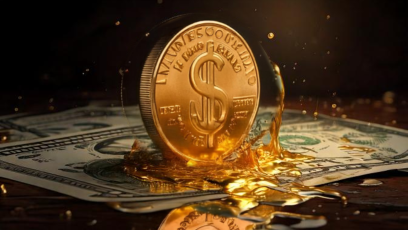
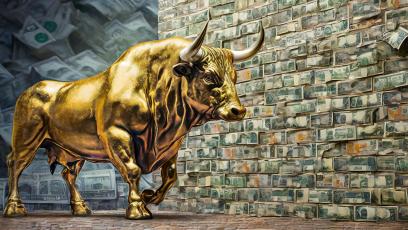
The gold market has been experiencing a turbulent period in August, with prices declining for the fourth consecutive trading session. This downward trend began on August 1, when the December gold contract decline by the fractional amount of $2.50, after opening at $2,493.40.

In a tumultuous day of trading, gold futures experienced a significant downturn, mirroring the broader market sell-off that swept across various asset classes. The most active December contract for gold plummeted nearly $100 in volatile trading, opening at $2,490.30 and reaching an intraday high of $2,500.80 before succumbing to intense selling pressure.

The July non-farm payroll report released by the Bureau of Labor Statistics has sent shockwaves through financial markets, raising concerns about the U.S. economy's health and dramatically altering expectations for Federal Reserve policy. The report revealed a significant weakening in the labor market, with only 114,000 new jobs added in July, far below economists' forecasts.

Gold has staged a remarkable rally, posting solid gains for three consecutive days, driven by a complex interplay of economic indicators and global events. The precious metal's December futures contract closed at $2,488.80 on Thursday, marking a cumulative increase of over $50 since Tuesday.

Gold prices continued its remarkable price advance following the Federal Reserve's latest FOMC meeting, signaling a potential shift in the central bank's monetary policy. The precious metal's December futures contract opened at $2,455.60 and closed at $2,493.40, marking a substantial daily gain of approximately $38.

In a notable uptick, gold prices rallied on Tuesday, reflecting market optimism about potential interest rate cuts by the Federal Reserve later this year. The precious metal's value climbed by 1.09%, or $26.40, with the most active December futures contract settling at $2,451.90 as of 5:50 PM EDT.

This week, the global financial landscape is poised for significant shifts as three major central banks convene to discuss potential interest rate changes. The Federal Reserve's Federal Open Market Committee (FOMC) meeting takes center stage, alongside gatherings of the Bank of Japan (BOJ) and the Bank of England (BOE).

The latest economic data has sparked renewed optimism in the gold market, with prices climbing over $20 as investors digested signs of cooling inflation and robust economic growth. This positive sentiment comes as the Federal Reserve's preferred inflation gauge, the Personal Consumption Expenditures (PCE) price index, shows continued progress in the battle against rising prices.

The Bureau of Economic Analysis (BEA) released its advance estimate of second-quarter GDP growth, revealing unexpected strength in the U.S. economy. Despite economists' predictions of a 2% annualized growth rate, the actual figure came in at a robust 2.8%, surpassing expectations and demonstrating resilience in the face of interest rates at a 23-year high.

As July draws to a close, investors and Federal Reserve officials alike are poised on the edge of their seats, eagerly awaiting two crucial economic reports that will shed light on the health of the U.S. economy. These reports, set to be released on Thursday and Friday, will provide pivotal information just days before the Federal Open Market Committee (FOMC) convenes for its July meeting.