Precious metals closed Friday's session in opposite directions, with silver posting a solid $1.59 gain while gold slipped a modest $9, giving back a fraction of Thursday's powerful $78 advance. The split outcome painted a nuanced picture of a market navigating competing forces: a weaker U.S.

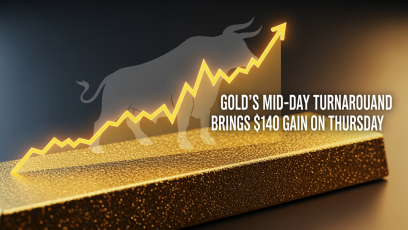
Precious metals reclaimed the spotlight on Thursday as gold surged $78 to close at a commanding premium, while silver added $0.46 in a session defined by renewed investor appetite for safe-haven assets.

Gold registered its third consecutive daily decline on Wednesday, with futures shedding $52.30, or 1.13%, to settle at $4,557.30 per ounce the weakest close of the month of April and a level that has erased more than $230 in value since the metal touched its year-to-date high.

Gold closed Tuesday at approximately $4,597 per ounce, extending losses into a second consecutive session and testing three-week lows. The $88 decline representing a 1.88% fall may appear modest against gold's extraordinary 38% gain over the past year, but its significance lies not in the magnitude of the move but in what is driving it.

Crude oil and gold are two of the world’s most closely watched commodities, and while they serve very different purposes, movements in oil prices can have a meaningful impact on gold. When crude oil rises sharply, it often creates economic conditions that make gold more attractive to investors.

Gold prices clawed back on Friday, attempting a meaningful recovery after a bruising week that left the metal on track for its first weekly loss in four sessions. Spot gold was quoted at $4,697 per ounce as of early morning Eastern Time, a $39 gain from the prior session and a remarkable $1,378 jump from the same date one year ago.

Gold and silver extended their recent slide Thursday, with both metals trading right around some major moving averages both are currently beneath their 50 and 100-day simple moving averages a technically bearish configuration that has been in place since mid-April.

Gold futures staged a measured recovery on Wednesday, settling at $4,758 per ounce on the COMEX — a gain of $19 on the session — as markets digested a complex cocktail of geopolitical relief and monetary policy anxiety.

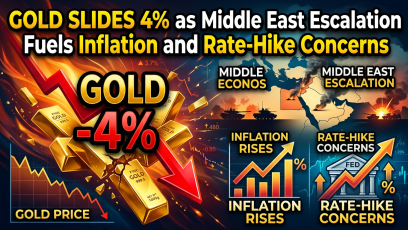
Gold shed more than $100 in intraday trading Tuesday, sliding from an opening of $4,842 per troy ounce to a session low near $4,700, as a surging U.S. dollar and mounting inflation anxieties tied to the ongoing Iran conflict weighed heavily on the precious metal.

Gold prices extended their decline Monday, giving back the bulk of gains earned during last week's brief ceasefire optimism, as renewed hostilities in the Persian Gulf sent oil prices sharply higher and reignited concerns over energy-driven inflation. The reversal serves as a stark reminder of just how tightly precious metals remain tethered to geopolitical developments in the Middle East.