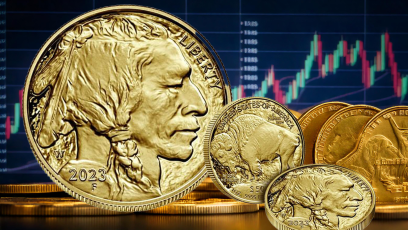
Market participants entered Thursday with heightened expectations following this week's encouraging Consumer Price Index data, which had rekindled optimism for monetary policy easing in the latter half of 2025.


Gold futures staged a modest recovery on Tuesday, snapping a two-day losing streak as investors digested mixed signals from the July Consumer Price Index report and recalibrated their expectations for Federal Reserve monetary policy.

Gold markets experienced significant turbulence on Monday as President Donald Trump's clarification on precious metals tariffs sent prices tumbling toward $3,350 per ounce.

Gold markets experienced extraordinary volatility this week as traders grappled with confusion surrounding the precious metal's exemption status under newly implemented reciprocal tariffs targeting Switzerland, one of America's largest gold trading partners.

According to The Financial Times, “The US has slapped tariffs on imports of one-kilo gold bars.” The bombshell article published at approximately 4:30 PM ET, this information came in the form of a ruling letter dated July 31 from The US customs Border Protection agency reportedly received by a Swiss

The S&P 500 advanced 0.73% to close at 6,345.06, driven primarily by Apple's 5% surge following confirmation of a $100 billion domestic manufacturing investment commitment. This brings Apple's total U.S. investment pledge to $600 billion over four years. The Nasdaq outperformed with a 1.21% gain to 21,169.42, while the Dow lagged, adding just 81 points (0.18%) to close at 44,193.12.

The latest economic indicators paint a concerning picture of the U.S. economy's trajectory, with the Institute for Supply Management's purchasing managers index delivering a disappointing performance that has reverberated across financial markets.

Gold futures climbed 0.3% to $3,409.30 per troy ounce, extending gains for a second consecutive session amid growing expectations for Federal Reserve rate cuts. The precious metal has risen $81.20, or 2.47%, over two sessions as economic data fuels monetary policy speculation.